Thailand · Summer 2027
Teen travel programs to Thailand
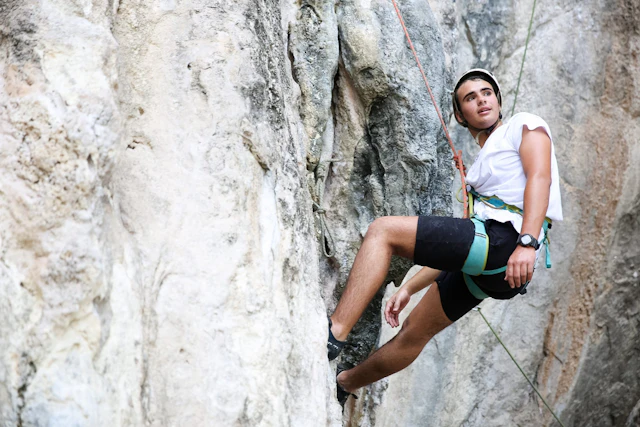
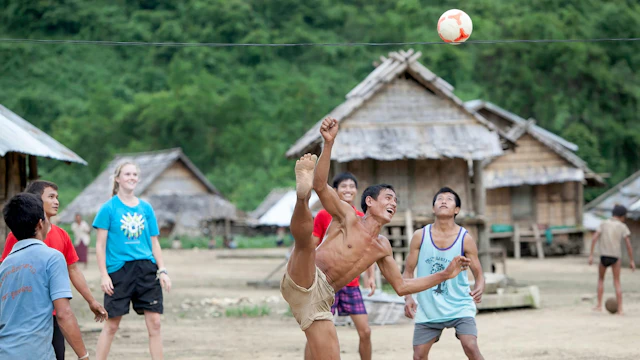
On Rustic Pathways teen travel programs to Thailand, students care for elephants in Lampang, live in Karen hill-tribe villages, rock climb in Krabi and cycle the ruins of Ayutthaya, a UNESCO World Heritage city founded in 1350.1
- 3 programs
- 12 to 23 days
- Ages 14–18
- From $3,995 Program Tuition


From $3,995 Program Tuition3 programs · Ages 14–18 · 6 departures
See the programs- Operating in Thailand
- Since 1999
- Language
- Thai; none needed to join
- Flight from New York
- 20 hr 50 min, 1 stop
- Getting there
- Optional chaperoned group flight from Los Angeles
Three Thailand programs for summer 2027
Rustic Pathways runs three Thailand teen travel programs for summer 2027: a 12-day elephant conservation program, a 16-day adventure program from Chiang Mai to Bangkok and Krabi, and a 23-day village service expedition.



Compare the Thailand programs
The three Thailand programs vary by length, Program Tuition, where students stay and what they do.
Show program
| Thai Elephant Conservation Project$3,995 | Thailand Adventurer$5,495 | Come With Nothing$6,995 | |
|---|---|---|---|
| Choose this if… | Your teen wants hands-on elephant care and conservation work. | Your teen wants adventure and culture, from mountains to beach. | Your teen wants to live and serve in remote hill-tribe villages. |
| Length | 12 days | 16 days | 23 days |
| Program Tuition | $3,995 | $5,495 | $6,995 |
| Where students stay | Hotels in Chiang Mai, then cabin-style rooms at the elephant center in Lampang | Vetted hotels with air-conditioning and private bathrooms, plus an ecolodge | A Chiang Mai hotel, then Karen village homestays with basic rooms and floor mattresses |
| Service or learning | 20 service hours: elephant care, herd tracking and forest restoration on Doi Suthep | 8 service hours: reforestation and elephant conservation projects | 60 service hours across three villages: water systems, a school road and teaching English |
| Adventure | White water rafting on the Mae Taeng River, Sticky Waterfall, Chiang Dao Cave, hot springs | Rock climbing and island snorkeling in Krabi, river rafting, ziplining, Bangkok and Ayutthaya | Muay Thai, hiking near Mae Hong Son, hot springs, white water rafting |
| See dates→ | See dates→ | See dates→ |
Prices are in U.S. dollars. Program Tuition is not the total cost. Flights to and from the program, the enrollment fee, medical insurance (required), travel insurance (optional) and personal expenses are separate.


Which Thailand program fits your teen?
Match your teen’s interest to a program, then check the dates below.
Choose in Thailand…
- For elephant care and conservation work: Thai Elephant Conservation Project.
- For adventure from Chiang Mai to Bangkok and Krabi: Thailand Adventurer.
- For village service and a simpler way of living: Come With Nothing.
What Thailand Program Tuition includes
Thailand Program Tuition ranges from $3,995 to $6,995 for 12 to 23 days, including accommodations, scheduled meals, ground transportation, airport transfers within designated windows, and planned activities.
Included
- Accommodation for every program night
- Breakfast, lunch, and dinner, from the first meal after airport pickup through the last meal before airport drop-off
- Airport transfers within the published arrival and departure windows
- Ground transportation during the program
- The three on-program flights between Chiang Mai, Bangkok and Krabi on Thailand Adventurer, with Program Leaders flying with students
- All scheduled activities, excursions and entrance fees listed in the program itinerary
- Gratuities and donations, so students never need to bring money to give away
- Program Leaders housed on site and available overnight
- 24/7 emergency support line for families
Not included
- Flights to and from the program, including the optional chaperoned group flight
- A one-time $100 enrollment fee, which rises closer to departure
- Medical insurance with coverage in Thailand (required)
- Travel insurance (optional, and strongly recommended)
- Personal expenses, such as spending money, laundry and phone data
Summer 2027 teen travel departure dates by program
Rustic Pathways’ three Thailand programs depart between June 16 and July 28, 2027 (6 departures). Compare these dates program by program in the timeline below.
Calendar tip: Each bar runs from the day a program starts to the day it ends. Select one to view that departure.
Thailand vs. Indonesia, Fiji and Japan
Thailand differs from Indonesia, Fiji and Japan by offering three programs, from 12 days with elephants to 23 days in remote villages. Indonesia offers scuba and a village homestay at the lowest tuition; Fiji features island service in English; and Japan offers a farm homestay.
Thailand vs.
| This pageThailand$3,995–$6,995 | Indonesia$2,195 | Fiji$3,995 | Japan$3,295 | |
|---|---|---|---|---|
| Choose this if… | Your teen wants a choice: elephants, adventure or village service. | Your teen wants scuba and a village homestay at the lowest tuition. | Your teen wants island service, snorkeling and reef conservation. | Your teen wants a farm homestay and bullet train rides. |
| Length | 12 to 23 days | 10 days, 7 nights | 16 days, 13 nights | 8 days, 6 nights |
| Program Tuition | $3,995–$6,995 | $2,195 | $3,995 | $3,295 |
| Language | Thai; none needed to join | Indonesian; none needed to join | English, iTaukei and Fiji Hindi; none needed to join | Japanese; none needed to join |
| Time difference in July2 | 11 hours ahead of U.S. Eastern | 12 hours ahead of U.S. Eastern | 16 hours ahead of U.S. Eastern | 13 hours ahead of U.S. Eastern |
| Travel time from New York3 | 20 hr 50 min, 1 stop | 22 hr 40 min, 1 stop | 19 hr 15 min, 1 stop | 13 hr 50 min nonstop |
| Travel time from Los Angeles | 18 hr 20 min, 1 stop | 20 hr, 1 stop | 11 hr 5 min nonstop | 11 hr 15 min nonstop |
| Travel time from London | 14 hr 15 min, 1 stop | 16 hr 40 min, 1 stop | 24 hr 25 min, 1 stop | 13 hr 35 min nonstop |
| Travel time from Hong Kong | 2 hr 50 min nonstop | 5 hr nonstop | 9 hr 35 min nonstop | 4 hr nonstop |
| Getting there | Passport. Optional chaperoned group flight from Los Angeles. | Passport. Students fly into Denpasar. | Passport. Optional chaperoned group flight from Los Angeles. | Passport. Optional chaperoned group flight from Los Angeles. |
| Land vs. water | Northern villages and elephants, plus Bangkok and Krabi, by program. | Scuba dives, a village homestay, volcano sunrise, river rafting. | Village service, then Yasawa Islands snorkeling and reef work. | Tokyo, then a farm homestay in Akita with a lake kayak. |
| Service | Elephant care, village projects or reforestation, 8 to 60 hours | No service hours; village stay and cultural learning | Sanitation, reforestation and reef projects, 45 hours | Farm work with local families, 10 hours |
| 2027 departures | 6 across three programs | 2: Jun 28, Jul 5 | 2: Jun 16, Jul 7 | 1: Jul 15 |
| See the Thailand programs↑ | View Indonesia programs→ | View Fiji programs→ | View Japan programs→ |
Prices are in U.S. dollars. Program Tuition is not the total cost. Flights to and from the program, the enrollment fee, medical insurance (required), travel insurance (optional) and personal expenses are separate.
The Thailand column covers its three programs, which run 12, 16 and 23 days. The Japan column covers Countryside Farms & Samurai Villages.
Is teen travel to Thailand safe?
Yes, teen travel to Thailand is safe on a supervised Rustic Pathways program. The U.S. State Department rates Thailand Level 1, its lowest level,4 and the programs run from June to early August, before September to November, when most tropical storms that reach Thailand arrive.5
Rustic Pathways has run programs in Thailand since 1999, with Program Leaders housed on site and available overnight and a 24/7 emergency support line.


Why book Thailand with Rustic Pathways
Booking with Rustic Pathways brings a chaperoned flight option, a parent portal and an advisor you can call.


In Thailand since 1999
Rustic Pathways has run programs in Thailand since 1999 and works with a government-run elephant conservation center in Lampang. Rustic Pathways has operated student travel since 1983.


Chaperoned group flights
U.S. students can join an optional chaperoned group flight from Los Angeles to Thailand on all three programs. The chaperoned group flight is not included in Program Tuition.


MyRustic parent portal
MyRustic (myrustictrip.com) is Rustic Pathways’ free, web-based parent and student portal. It holds enrollment forms, billing, the full itinerary, travel logistics and a moderated daily photo feed.


A travel advisor to call
Scott Ingram, Director of Admissions, and Emily Green, Admissions Counselor, answer Thailand questions before you enroll. Call +1 440-975-9691 or schedule a call.
Thailand in their words: student takeovers
After the program, students take over the Rustic Pathways Instagram with their own photos and stories. Here are three from Thailand programs in summer 2025 and 2026.
“Because of this trip, I have learned to be Sabai Sabi, which means to relax and chill, live in the moment, and appreciate the smaller experiences with the people around you.” Kiran D., on Instagram
“Hi, my name is Kiran and I just got back from the Thailand Adventurer Program. This was probably the best experience of my life. I made so many longtime best friends and enjoyed so many new experiences.
I had never been to Thailand before or even traveled without my parents, but I can confidently say it was the best decision I've ever made. Because of this trip, I have learned to be Sabai Sabi, which means to relax and chill, live in the moment, and appreciate the smaller experiences with the people around you.
I got to meet so many new people who were also on my trip and who were so incredibly welcoming. Everyone had such an awesome vibe and I enjoed getting to know every single person. I will always remeber the late nights playing uno and cards, the tuk tuk rides, and the 7-11 runs with my favorite people on earth.
Shoutout to Caitlin, Kris, Chet, and J who made the trip so incredibly special and fun for every one of us!!! I'll never forget this amazing time.”
Kiran D., Thailand Adventurer, summer 2026
“Every week we visited a new village where we taught English to the most amazing and outgoing children, built water filtration systems, painted murals, and connected with the villagers who were so kind enough to take care of us.” Lianna S., on Instagram
“Hi! I’m Lianna, and I recently traveled on the Thailand Come With Nothing program. I began this trip expecting to just do service and tour a country I have never been to, but it was so much more than that. By the end of those 3 long weeks, I made everlasting friendships, created memories that I will never forget, and immersed myself in an unfamiliar culture that ended up being so beautiful.
Every week we visited a new village where we taught English to the most amazing and outgoing children, built water filtration systems, painted murals, and connected with the villagers who were so kind enough to take care of us. Although there was a language barrier, it was not hard to understand how meaningful it was for them and for us to help and experience each other’s company. In between villages, we toured the small towns and cities, being able to further explore the entirety of the Thai culture.
Visiting Thailand opened up new understandings about myself and others. Staying in the villages expanded my perspective on how life is without constantly relying on technology to actually live it, and how the little things are so much more valuable to be truly happy. Not only am I grateful for this, but I am grateful to have been able to experience it with the most awesome group, our amazing leaders Kris and Piper, along with the help of Sue, Chris, Pido, and Kevin. It would have not been the same without any of them, so thank you to them and Rustic Pathways for an unforgettable summer!”
Lianna S., Come With Nothing, summer 2026
“My favorite part? Definitely being able to spend time with the elephants! Swimming, feeding, and cleaning the elephants was such a blast” Jessie T., on Instagram
“Sawat dee kha! My name is Jessie and I was so grateful to be on the Thailand Elephant Conservation trip. It was filled with many unforgettable adventures, memories, and lessons.
My favorite part? Definitely being able to spend time with the elephants! Swimming, feeding, and cleaning the elephants was such a blast, I would love to be able to do it all over again.
Most importantly, a special shoutout to all the amazing people I met on the trip and an even bigger thank you to my Program Leaders (P-Chet, P-Jay, Zoe, and Sergio) for making this trip so meaningful and special.
If you’re thinking about doing a Rustic Pathways program, don’t hesitate and go for it! The connections you make with new cultures, foods, locals (and elephants!) are truly unforgettable.”
Jessie T., Thai Elephant Conservation Project, summer 2025
Thailand teen travel FAQ
What makes Thailand different from other countries for teen travel?
Thailand differs from other countries for teen travel through hands-on elephant conservation, northern village life and Thai cultural experiences. Depending on the program, students learn from mahouts in Lampang, join community projects or explore Chiang Mai, Bangkok and Krabi.
Which Thailand program is best for a first international program?
Thai Elephant Conservation Project is the best Thailand option for a first international program if your teen wants the shortest, lowest-tuition program: 12 days for $3,995. Based in Chiang Mai and Lampang, it requires no experience and includes day-one icebreakers led by Program Leaders.
What do students do with the elephants?
Students on Thai Elephant Conservation Project support daily elephant care, track herd behavior and visit an elephant hospital and nursery. They work with conservation staff and mahouts at a government-run, 300-acre center in Lampang.
How big are the groups on Thailand programs?
Thailand program groups are limited to 16 students for Thai Elephant Conservation Project and 15 for Thailand Adventurer and Come With Nothing. Across Rustic Pathways, the median staffing ratio is 4.37 students per staff member (4.37:1); no program exceeds 7 students per staff member (7:1).
Can Thailand programs handle dietary needs and food allergies?
Thailand programs can accommodate some dietary needs and food allergies, but severe peanut allergies can be extremely difficult or impossible to accommodate safely. Families must disclose allergies and obtain itinerary-specific feasibility confirmation from Rustic Pathways before enrolling.
What do students need to travel to Thailand?
Students need a passport and medical insurance valid in Thailand. U.S. citizens do not need a visa; other nationalities may. Travel insurance is optional but strongly recommended. Review the CDC’s Thailand travel health guidance before departure.



Footnotes
- Ayutthaya was founded in 1350 and became a UNESCO World Heritage Site in 1991, according to UNESCO. ↩
- Time differences are for July, from the IANA time zone database. None of the four observes daylight saving time. ↩
- Shortest total travel time, including layovers, for one-way flights on any day from June 22 to 28, 2027, as listed on Google Flights on October 7, 2026, and for Thailand, to Chiang Mai (CNX), on October 12, 2026. New York and London include all area airports, and schedules change. ↩
- Advisory levels as of October 2026. Check travel.state.gov for the current level before travel. ↩
- Tropical storms entering Thailand by month, 1951 to 2013: the Thai Meteorological Department. ↩
Thailand has 6 summer 2027 departures across three programs.
Compare the three programs